How to calculate food cost percentage (with a worked example)
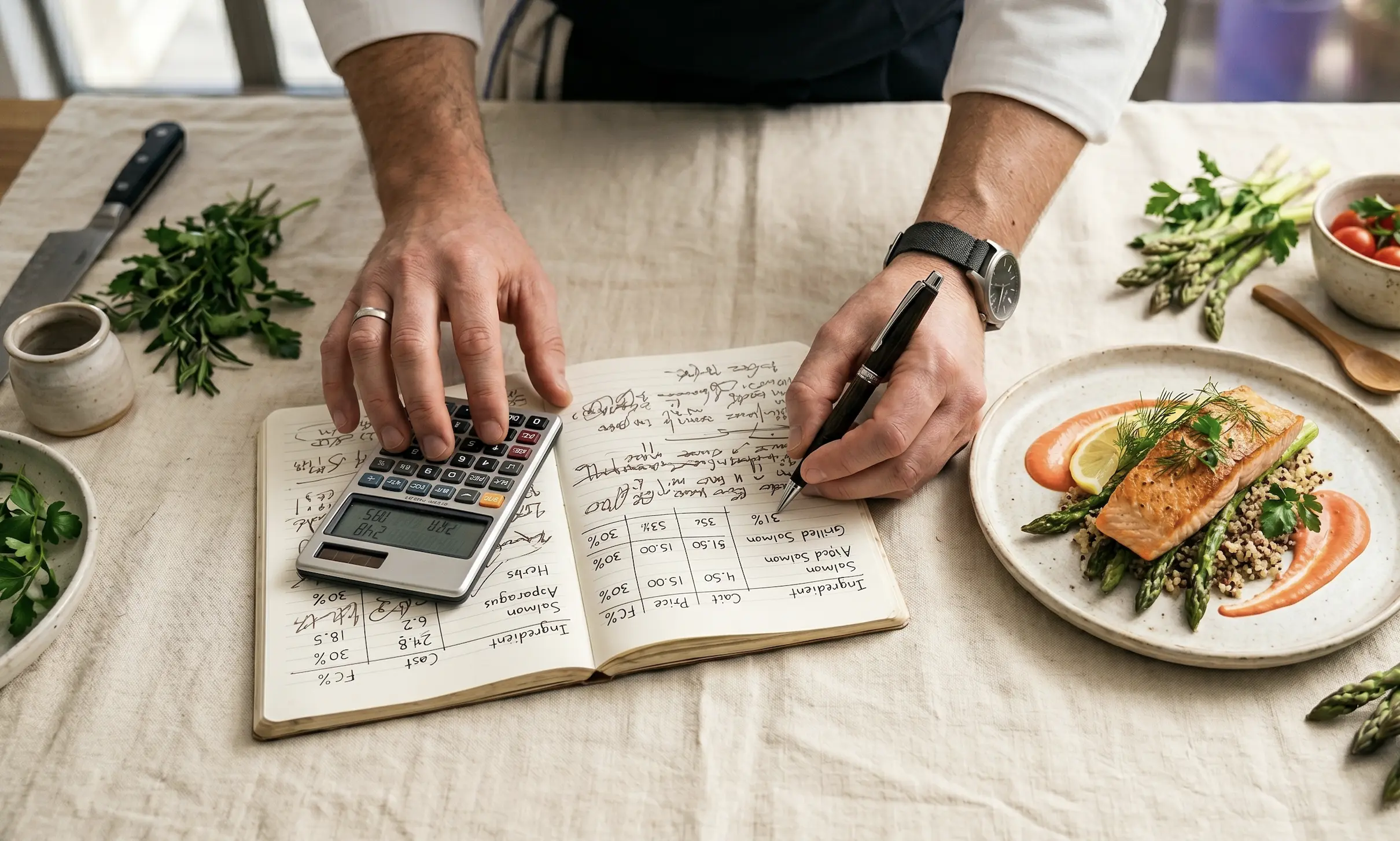
Food cost percentage is the single most important number most kitchens never look at closely enough. It tells you how much of every sales dollar is going straight back out the door as ingredients. Get it right and a thin-margin business becomes a healthy one. Ignore it and even a packed dining room can lose money.
The formula
At its simplest, food cost percentage is the cost of the food you used divided by the revenue that food generated:
Food cost % = (Cost of goods sold ÷ Food sales) × 100
There are two views worth tracking. Your theoretical food cost is what your recipes say you should have spent for the dishes you sold. Your actual food cost is what you really spent, measured from purchases and inventory counts. The gap between them is variance, and that gap is usually where the money is leaking.
A worked example
Say last month you opened with $8,000 of inventory, purchased $22,000 of food, and counted $7,000 still on hand at month end. Your cost of goods sold (COGS) is:
- Beginning inventory: $8,000
- Plus purchases: $22,000
- Minus ending inventory: $7,000
- COGS = $8,000 + $22,000 − $7,000 = $23,000
If food sales for the month were $74,000, then your food cost percentage is ($23,000 ÷ $74,000) × 100 ≈ 31.1%. That single number is now comparable month to month, and against your target.
What is a good food cost percentage?
Most full-service restaurants aim for food cost somewhere in the high-20s to low-30s as a percentage of food sales, though the right target depends heavily on your concept, menu, and region. A steakhouse and a pasta-forward trattoria will land in very different places, and both can be healthy.
Watch the trend, not just the number. A food cost of 31% is not inherently good or bad. What matters is whether it is stable, where you intend it to be, and moving in the right direction. A single point of unexpected drift is your early-warning signal.
Why most kitchens get this wrong
The math is easy. Keeping the inputs current is the hard part. Ingredient prices move constantly, recipes change, and counts are tedious. A spreadsheet that was accurate in January is fiction by April. That is exactly the problem Curry was built to solve: update an ingredient price once and every recipe, dish, and menu re-costs instantly, so your food cost percentage reflects reality, not a stale snapshot.
- Cost every recipe down to the portion, including sub-recipes and yields.
- Keep ingredient prices current so plate costs stay honest.
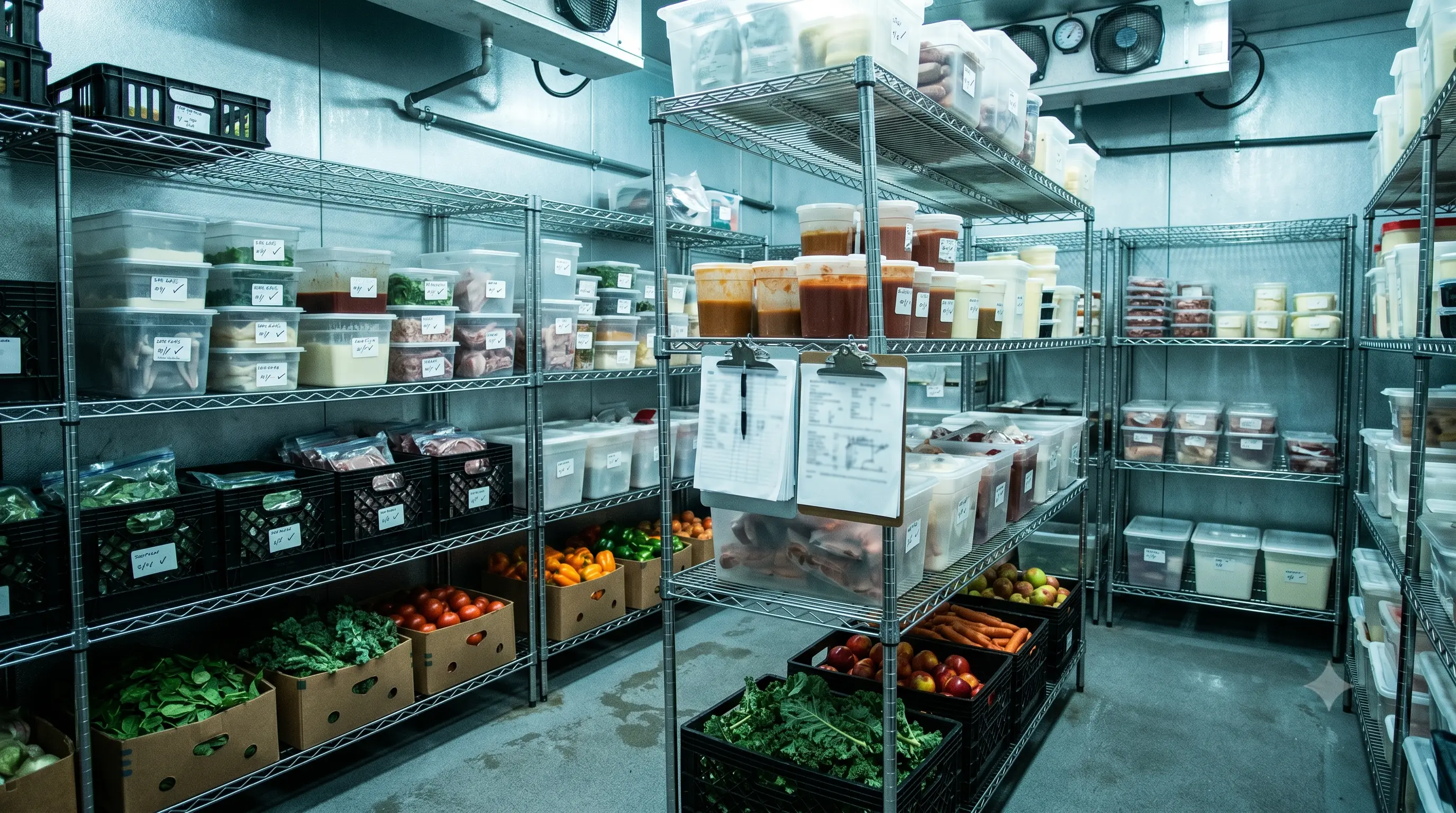
- Count regularly and log spoilage so you can measure variance.
- Review food cost % by period and by dish, then act on the outliers.
Do those four things consistently and food cost stops being a month-end surprise and becomes a lever you control.
See it on your own menu
Reading about food cost is one thing. Watching it appear on your own plates is another. Start free and cost your first menu today.
Start free